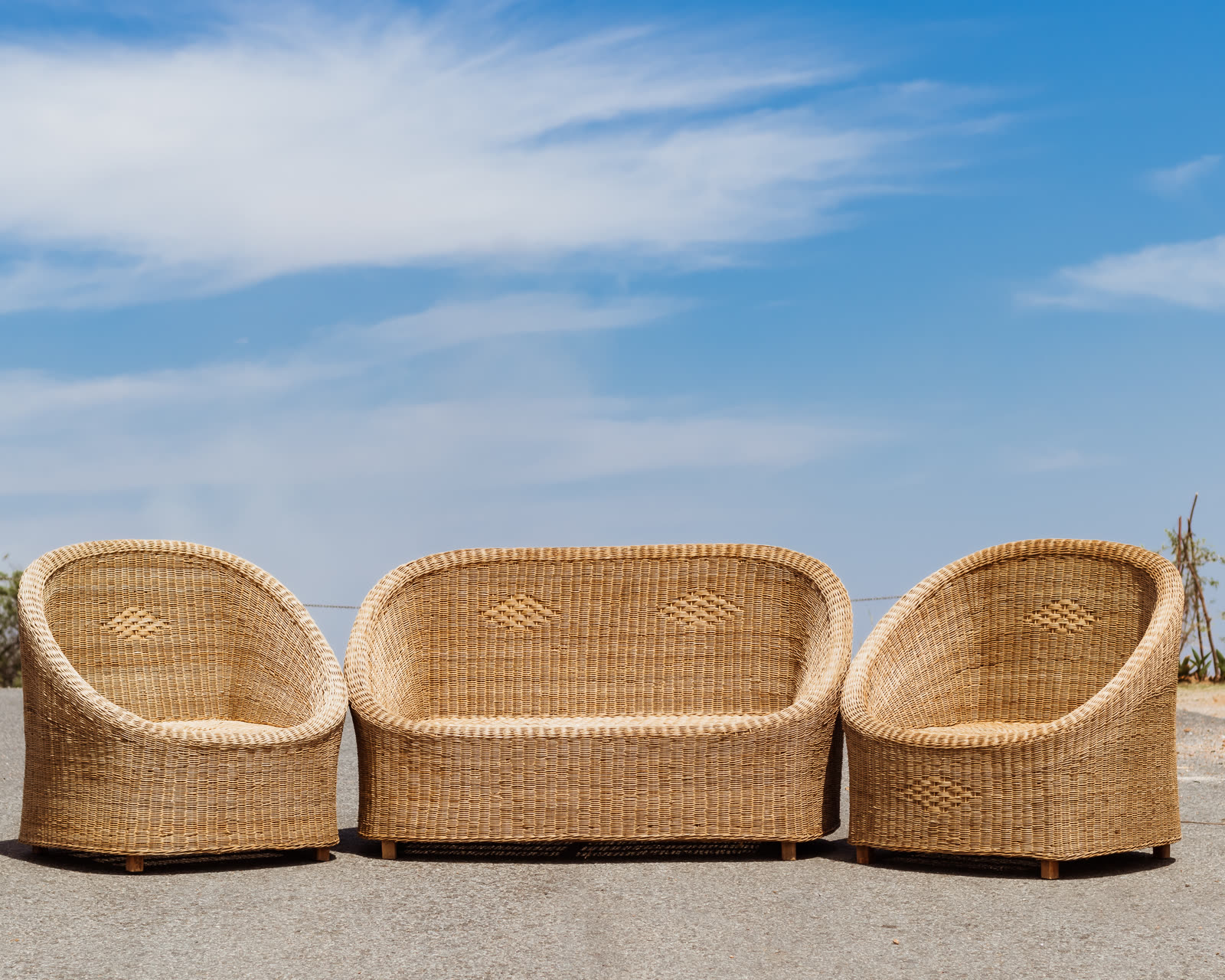
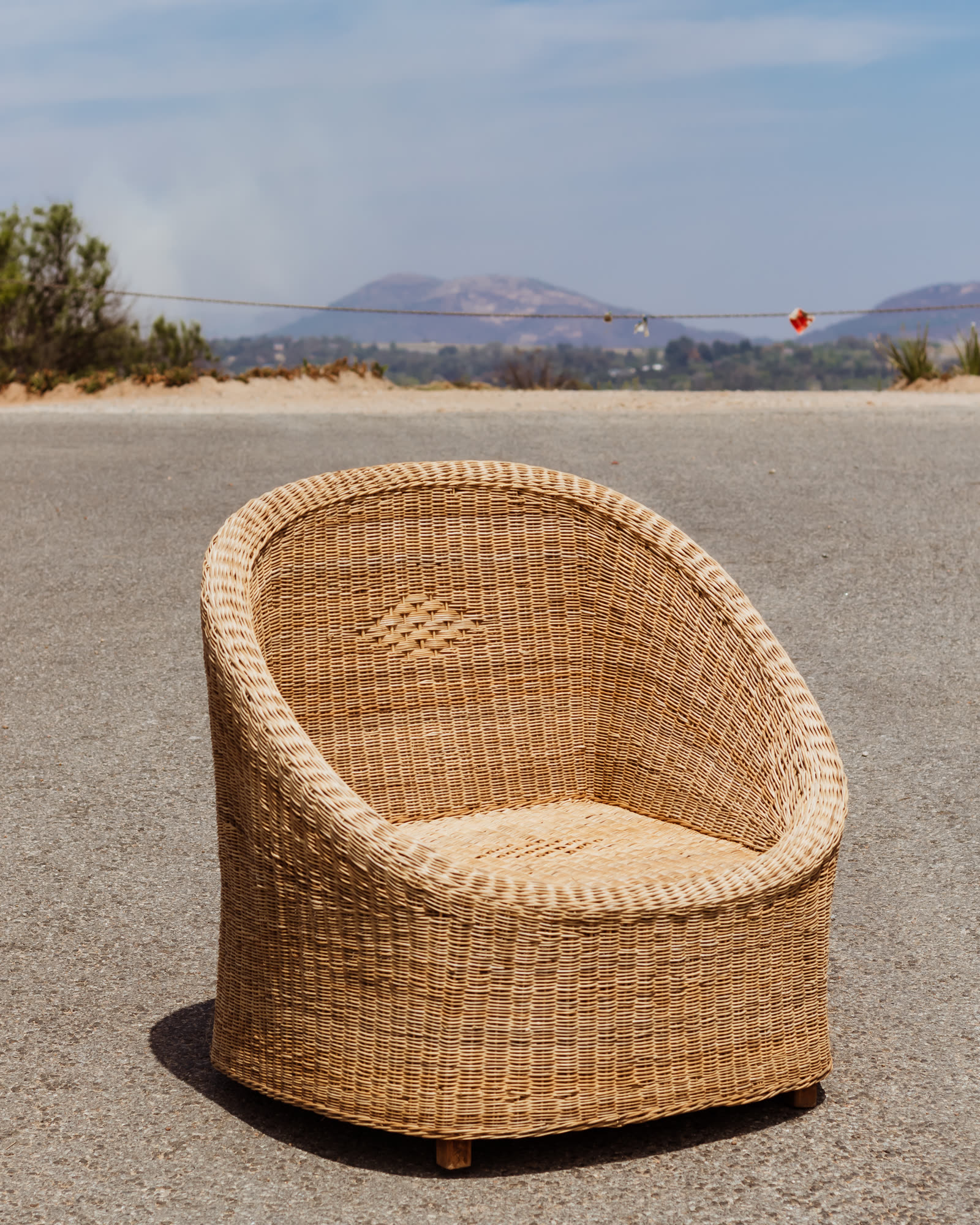
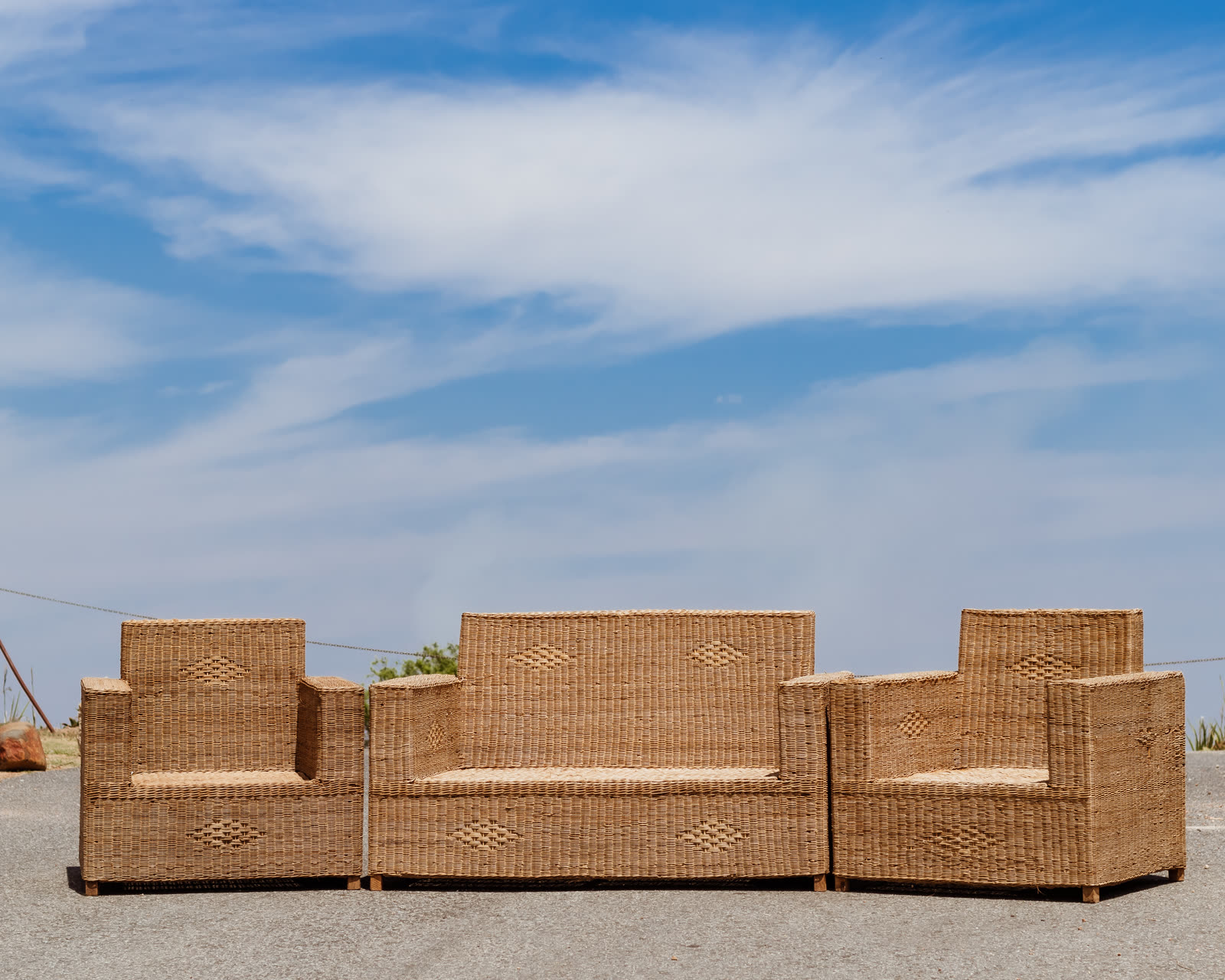
The Malawian chair is one of the most loved woven forms on the continent: a low seat, a rounded arm-and-back rail, and an open cane weave that breathes in warm rooms.
Ours is built by hand in cane and rattan and finished in its natural tone, so it settles easily beside timber, linen and clay.
Available to order · handwoven · handwoven in 2–4 weeks
Your piece is woven to order by the studio team.
Delivery to your area
Choose your province for an estimated delivery date and courier cost.
Delivered South Africa wide. Shipping is quoted per order based on size and destination — we confirm the cost with you before dispatch.
The Malawi chair, woven in natural cane
Also written Malawian chair, this is the low, deep-seated woven armchair that has become a fixture of South African stoeps. Ours is worked row by row in natural cane over a shaped frame — a wicker weave that breathes in the heat.
Garden chairs that stay light enough to move
As garden chairs go, cane is unusually easy to live with: light enough to carry to the shade, generous enough to sit in all afternoon. Keep it under cover and it will outlast most moulded outdoor seating.
Material care & durability
Caring for cane, rattan and wicker — and how long it lasts
Cane, rattan and wicker are natural plant materials, not coatings on a synthetic core. Looked after simply and kept out of rain and hard afternoon sun, a handwoven LOWE piece stays tight, warm-toned and structurally sound for decades — and can be rewoven rather than replaced.
Everyday cleaning
Dust weekly with a dry soft brush or a vacuum brush head, working along the direction of the weave rather than across it.
Wipe marks with a barely damp cloth and dry immediately — cane should never be left wet or soaked.
Use no bleach, no solvent cleaners and no silicone polish; they dry out the fibre and dull the natural sheen.
Humidity, sun and rain
Suited to covered outdoor areas only — verandas, stoeps, pergolas and braai rooms. Rain and sustained direct sun are the two things that shorten a weave's life.
In very dry inland climates (Gauteng, the Karoo), mist the underside lightly every few months to keep the fibre supple.
In humid coastal air (Durban, the Cape south coast), keep air moving around the piece and dry it after misty spells to prevent mould on the frame.
Keeping the weave tight
A slightly loose weave usually tightens again once the fibre rehydrates — wipe with a damp cloth and let it dry naturally out of the sun.
Never drag a piece across the floor; lift it so the frame joints and weave anchors are not loaded sideways.
Rotate seating and cushions occasionally so one seat does not carry all the wear.
Finishes and repairs
Refresh the natural finish every 18–24 months with a light coat of clear furniture wax or boiled linseed oil, applied sparingly and buffed off.
Snagged or lifted strands can be trimmed flush with a sharp blade; do not pull them.
Damaged sections can be rewoven by the studio — message us with a photo and we will quote the repair rather than sell you a replacement.
Longevity expectations
Indoors, cared for
15–25 years
Weave and frame remain sound; tone deepens to a warm honey over time.
Covered patio
8–15 years
Expect gentle silvering of exposed strands; frame life is unaffected.
Exposed to rain or full sun
2–4 years
Not recommended — fibre dries, splits and loses tension quickly.
Reweave interval
Every 10+ years
Seats in daily use can be rewoven by the studio to as-new tension.
Malawian Chair — customer reviews
4.5 / 5 from 2 reviews
A proper Malawi chair
I've bought Malawi chairs before that sagged within a year. This one is woven far tighter and the frame doesn't creak. Excellent value at the price.
Lerato S. · Soweto ·
Beautiful, and honest about the wait
Took the full four weeks, which was communicated up front. The weave variation between the two chairs is subtle and, honestly, part of the charm.