Cane, rattan or wicker? A plain answer to a confusing question
8 July 2025 · 4 min read
Three words used interchangeably in showrooms, describing three genuinely different things.
Ask for a rattan chair in three shops and you will be shown three different things: a solid vine frame, a woven cane surface, and a synthetic weave that is neither. The words have blurred, but the distinction is simple and worth knowing before you spend money.
Rattan is the plant
Rattan is a climbing palm that grows as a solid, flexible vine. Because it is solid rather than hollow, it can be steam-bent into curved frames and it holds that shape under load. When a chair is described as having a rattan frame, this is what is meant.
Cane is the skin of that plant
Cane is the outer bark of the rattan vine, peeled into long strands and woven into seats, backs and panels. It is what you are touching when you run a hand across the weave of a Malawi chair.
Wicker is the technique, not a material
Wicker is a way of weaving. You can weave wicker in cane, rattan, willow, seagrass or plastic. So 'wicker furniture' tells you how a piece was made, not what it is made of — which is exactly why synthetic patio furniture is so often sold under the word.
Our pieces are natural throughout: a rattan or timber frame, a hand-woven natural cane surface, unbleached and finished lightly so the grain stays visible.
What this means when you buy
Ask two questions: what is the frame, and what is the weave. If either answer is 'resin' or 'PE', you are buying synthetic — durable in the open, but it will not age, cannot be rewoven, and does not feel the same underhand.
Natural cane and rattan want shade and dry air. Given both, they last for years and improve in colour.
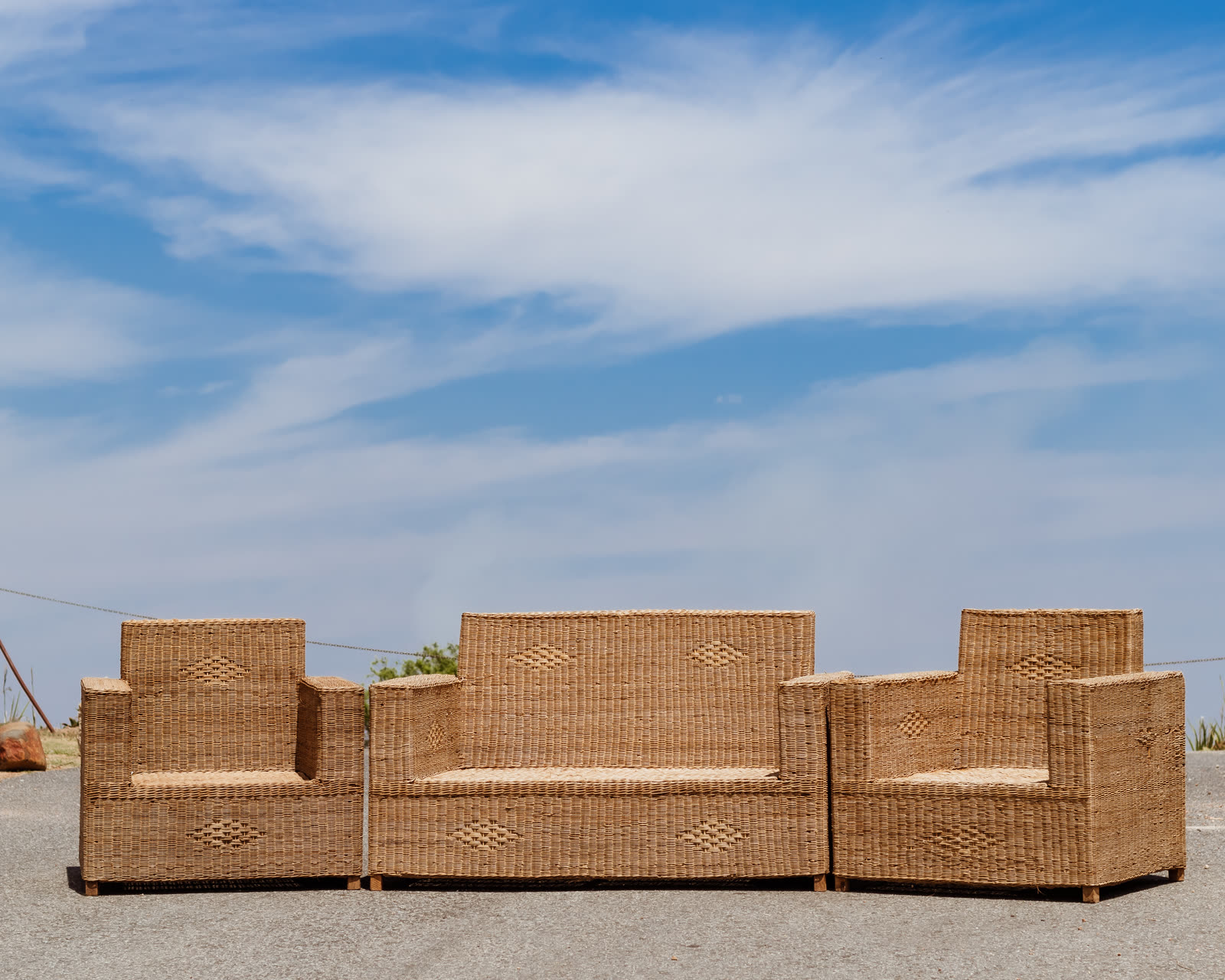
Common questions
- What is the difference between cane and rattan?
- Rattan is the solid palm vine used for frames. Cane is the outer skin of that vine, peeled and woven into seats, backs and panels.
- Is wicker a material?
- No. Wicker is a weaving technique that can be worked in cane, rattan, willow, seagrass or synthetic fibre.
- Is natural rattan better than synthetic wicker?
- For covered spaces, natural rattan and cane are warmer, lighter and repairable by hand. Synthetic weave survives full exposure but cannot be rewoven or age gracefully.
Pieces in this story
Furniture
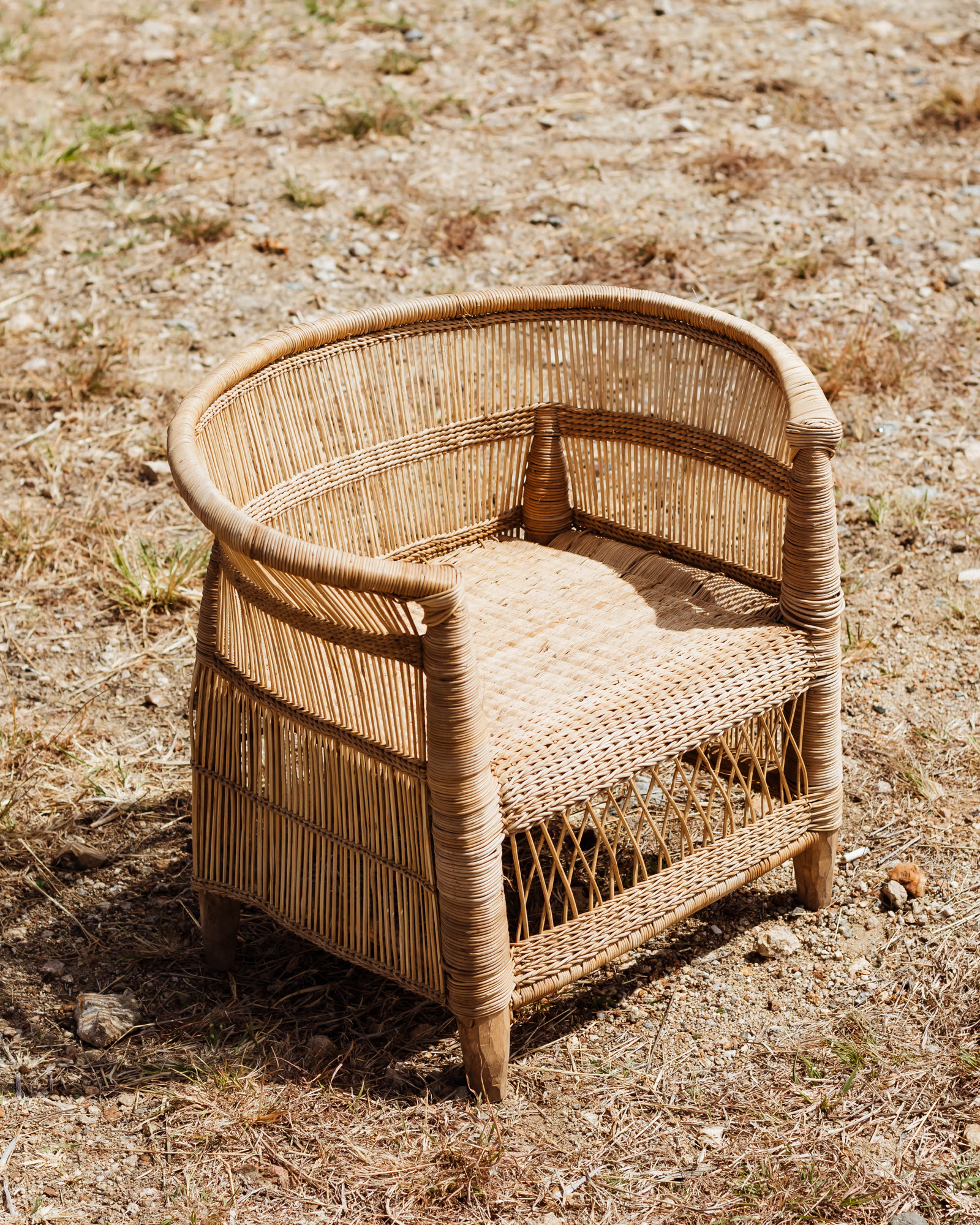
Malawian Chair
The classic low-slung woven cane chair — an African interiors staple, made by hand.
Furniture
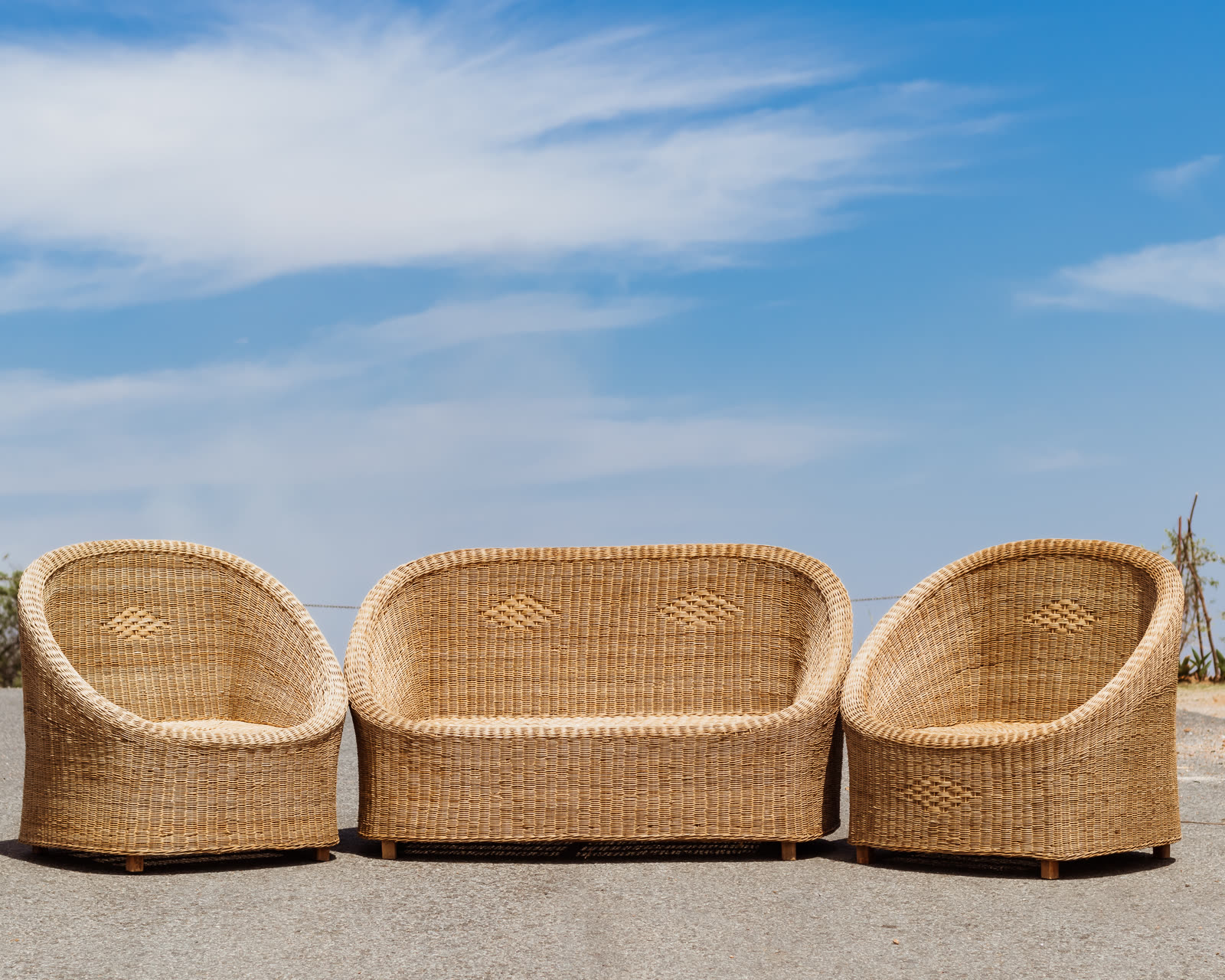
Curved Rattan Couch Set
A softly curved lounge set — two-seater and companion chairs — handwoven in natural rattan.
Lighting
Rattan Slender Pendant
A tall, slender woven pendant that throws soft patterned light across a room.